01
Truing the base over the limestone
We cut, grade, and tamp the subbase down to Broward's near-grade limestone so the slab takes weight without dishing, firming any hollow seam where the tidal table runs close beneath a waterfront lot.
A driveway that bears the load and sheds Fort Lauderdale's downpours and tidal flooding alike. We pour it thick over a base trued to the near-grade limestone, reinforce it with structural fiber and welded wire mesh so the ocean air finds no steel grid to rust, and grade it so water heads for the street instead of creeping in under the slab.
Tear-out, forms, base, reinforcement, pour, screed, broom, joints, cure. The whole job, in 3D.
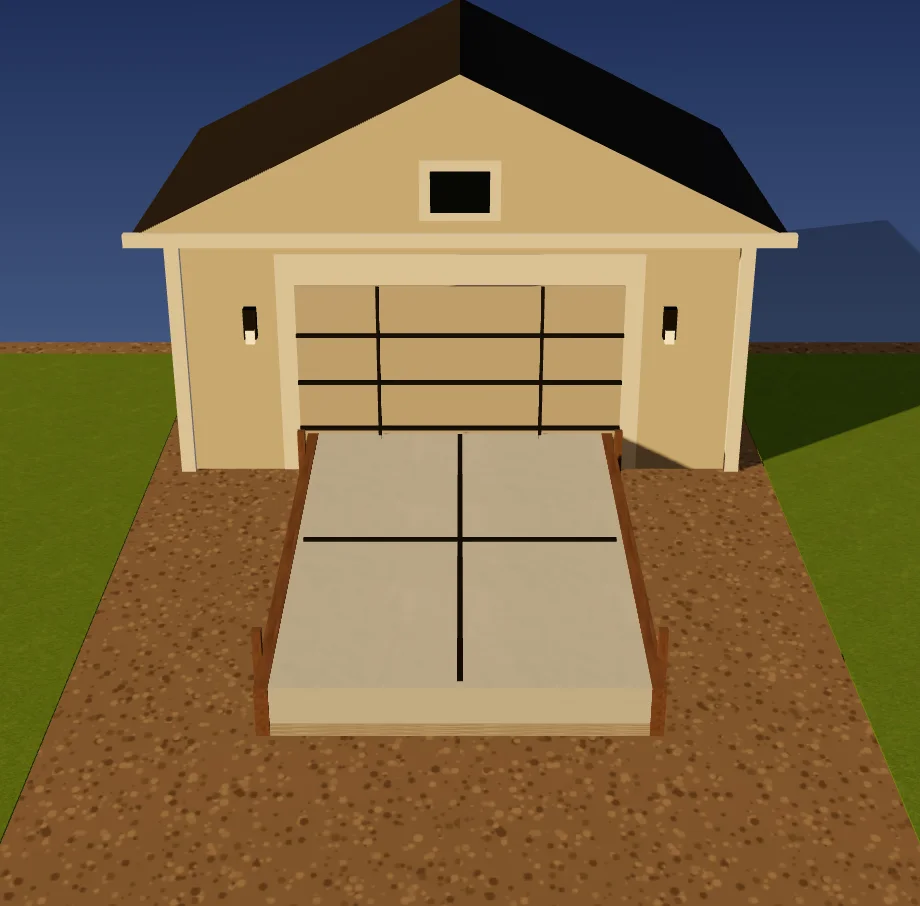
Drag the handle to reveal the finished pour.
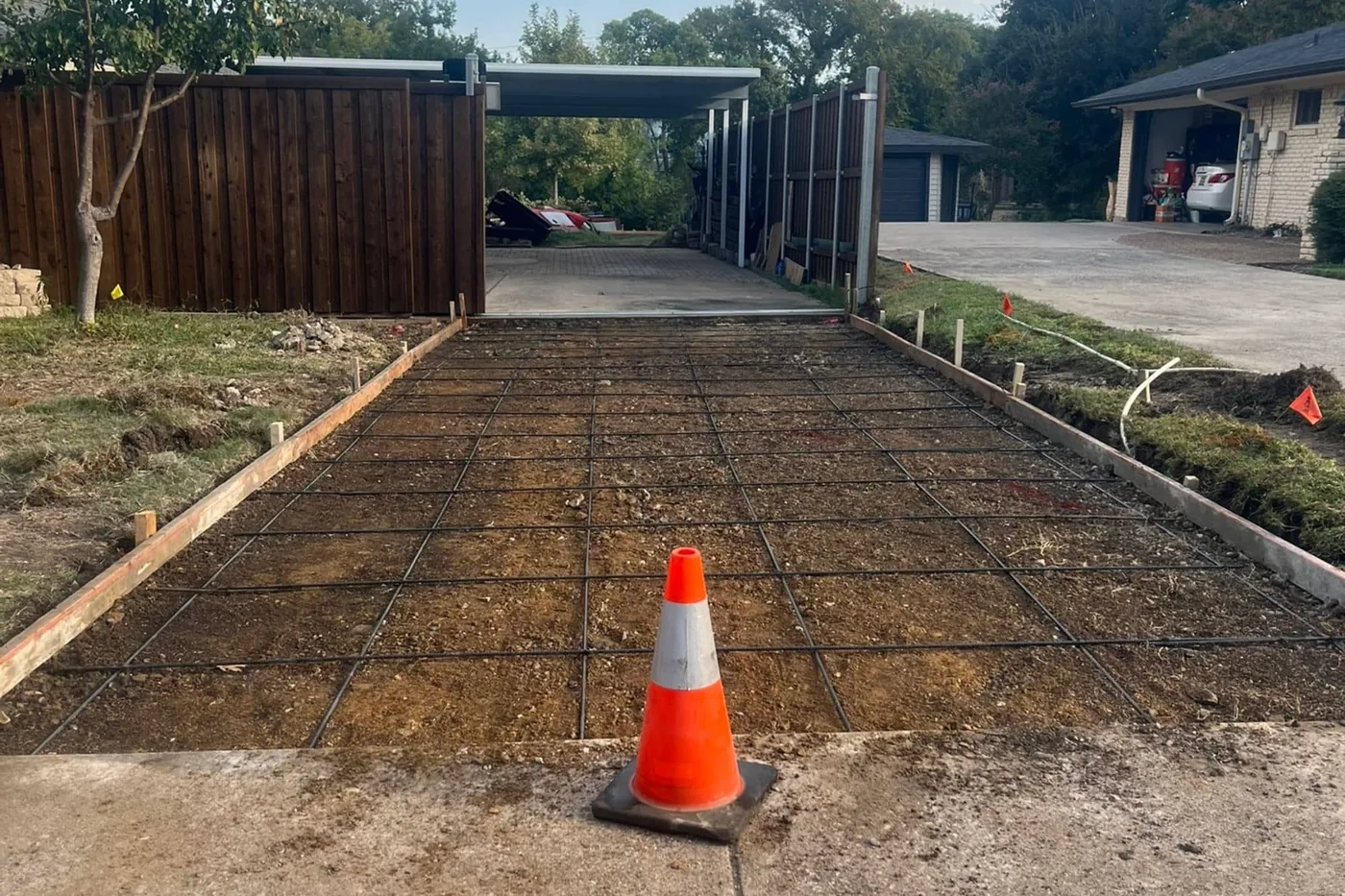
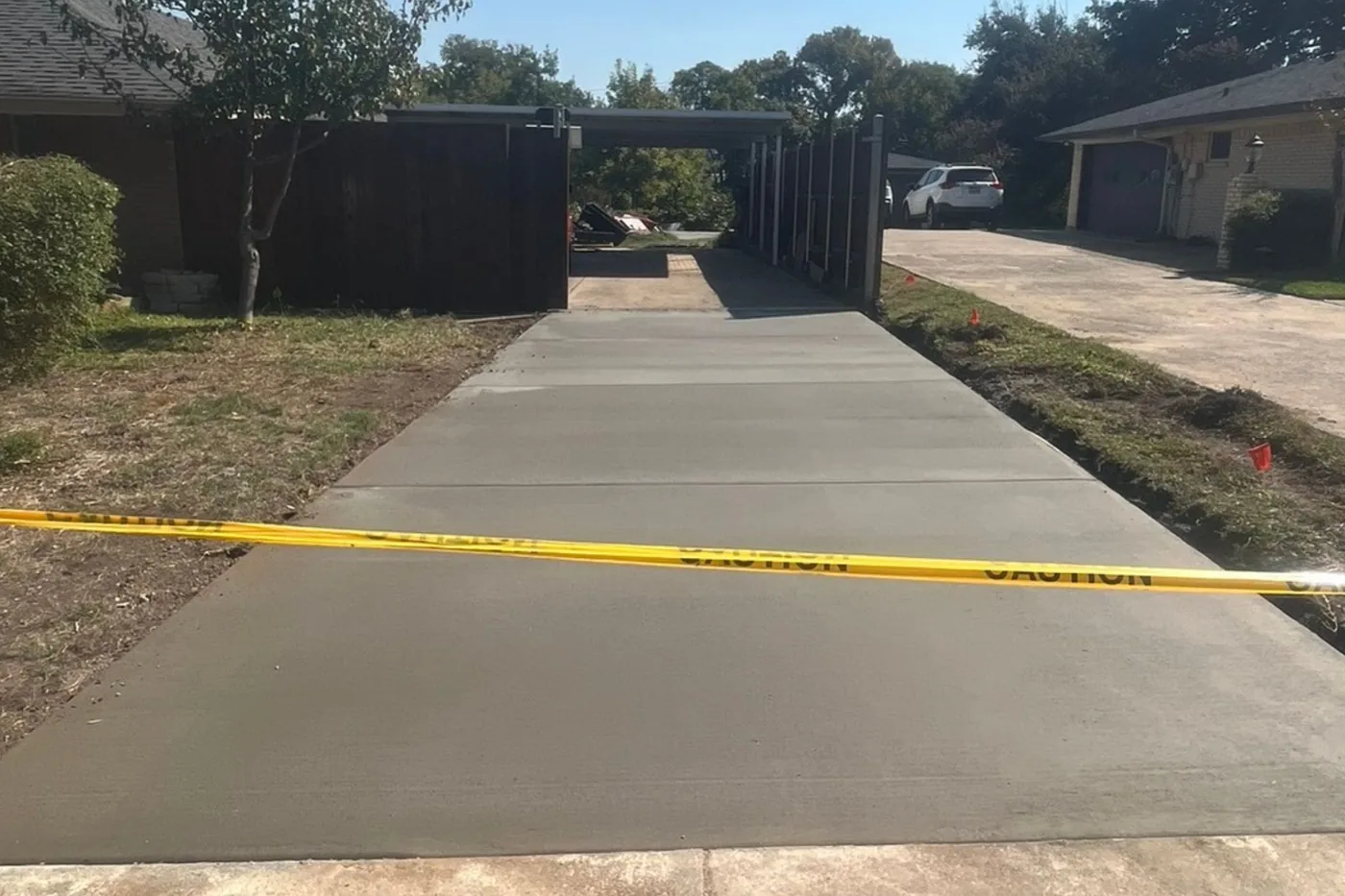
Credibility comes from how it's built, not from promises. Here's the order of operations on every concrete driveways job.
We cut, grade, and tamp the subbase down to Broward's near-grade limestone so the slab takes weight without dishing, firming any hollow seam where the tidal table runs close beneath a waterfront lot.
A driveway goes deeper than a patio, gauged to the cars, the daily driver, and the loaded boat trailer that swings in and backs down toward the ramp month after month in this boating town.
The drive carries structural fiber stirred through the batch and welded wire mesh over the slab to spread the wheel loads and lock the surface into one piece, the way waterfront flatwork is built on frost-free ground beside the Intracoastal. A rebar mat answers for structural slabs and seawall work, not a residential drive, and every length of steel we leave out is one less thing the Atlantic salt can corrode.
Expansion and control joints absorb the slab's give, and we tip the surface so a downpour and any tidal rise both track toward the street and the apron rather than gathering on the drive or backing up against the house.
You get a firm drive-on date, and we cure the pour against the coast's heat and salt-thick air so the slab gains strength all the way through instead of crusting on top while it stays green below.
Most contractors vanish after the deposit. We pick up the phone, show up when we say, and stand behind the work after the truck leaves. The follow-through is the difference.
A foreman we know runs your job and a vetted crew does the work, managed by Lucky's, one company accountable from the first call to the final walkthrough.
COI and lien waivers on file before we break ground. The documentation that lets commercial clients pay and gives homeowners peace of mind.
Prepped subgrade, reinforced and mixed to spec for the job, and proper curing. We build credibility through the process, not promises. On concrete driveways, that starts with truing the base over the limestone.
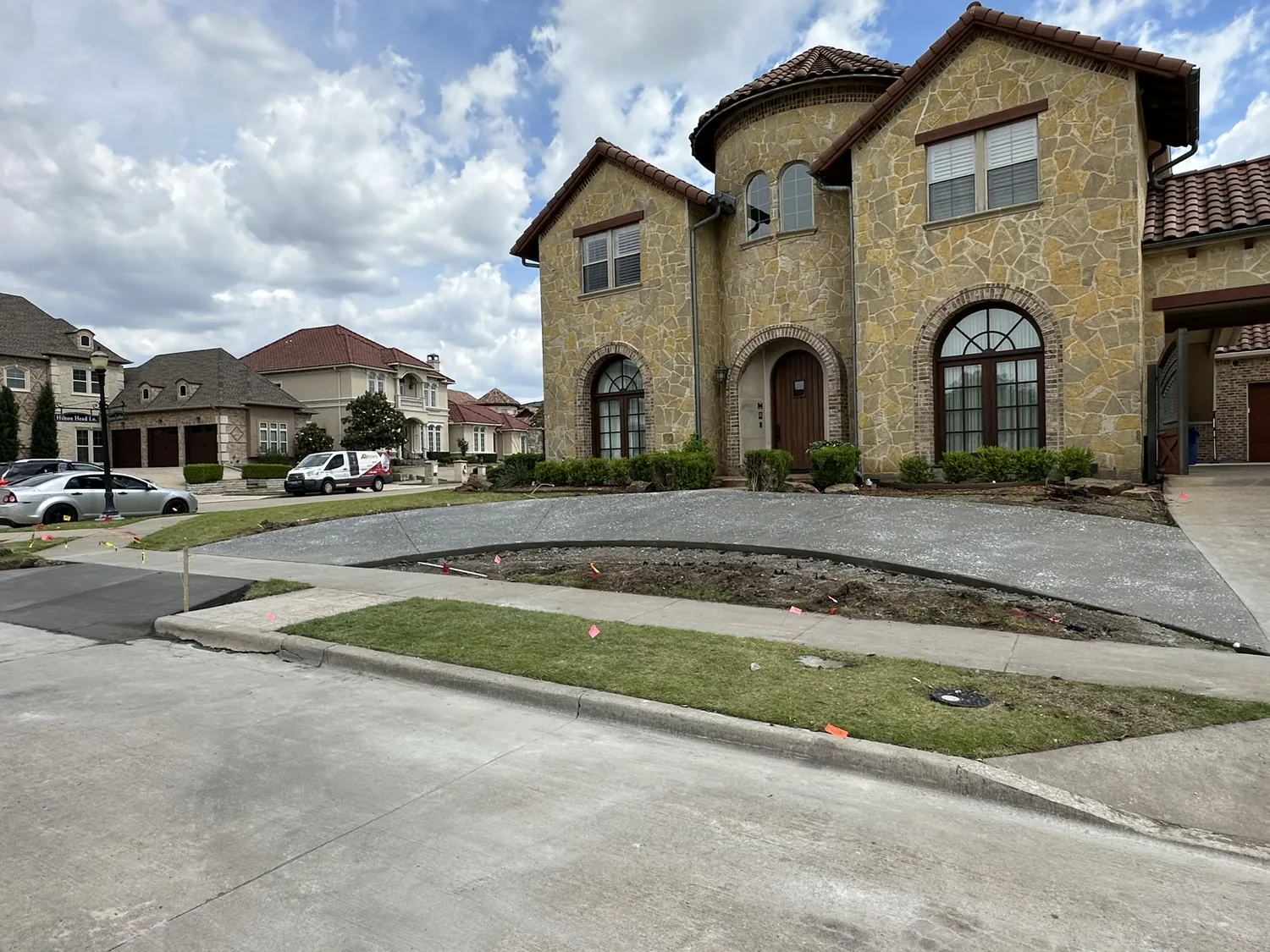
A Lauderdale driveway lands above a bare flatwork figure because it answers to the ground, the tide, and the salt all at once: a base trued to near-grade limestone, fiber and welded wire mesh through the slab, joints set on purpose, and grading that carries both storm rain and a tidal rise off. For a reference, a standard residential drive opens around $8 to $14 per square foot, climbing with a decorative finish or a heavy tear-out. The figure then tracks square footage, a 4 to 6 inch section, the finish, and any demolition, and we commit to it on the lot rather than down a phone line.
A residential driveway here is reinforced with structural fiber worked into the concrete and welded wire mesh run over the slab, the everyday call on frost-free, salt-laden waterfront ground. That pairing carries the wheel loads and ties the surface together with no heavy steel rebar mat, which we keep for structural and seawall work. So close to the Atlantic, each foot of steel left out of the slab is a foot the salt can never rust through.
On two fronts at once: a base trued to the near-grade limestone so nothing dishes or lifts the slab from below, and structural fiber with welded wire mesh tied to a deliberate joint plan so any travel that does come stays penned. We also tip the slab so water leaves it, because ground soaked under one corner by a tide and dry under another is a quick road to a crack.
Over enough time, yes. Water that lingers on or beside the slab, whether it rose with a king tide or fell as a squall, keeps the ground unevenly soaked and gnaws at the joints and edges, and storm surge can leave the surface underwater outright. We grade both the pour and its approach to drain and set the base knowing the table is tidal and shallow.
Walk it first and park on it later, since concrete keeps stiffening well past the point the surface looks done. We hand over the exact dates for your slab, set against the heat and salt-thick air it cured in.
Yes, and the tear-out, haul-off, and fresh pour come quoted as one scope. An old slab split down the middle or sunk in patches almost always betrays a base or drainage fault underneath that we put right on the rebuild.
You'll hear back from a real person, usually the same day. No call center, no runaround, no chasing us down.
Booking up fast this season. Or call (754) 704-4492