How much does a concrete patio cost in Fort Lauderdale?
A waterfront patio here picks up line items the national average never sees, and most trace back to the canal: truing a bed over near-grade limestone, building for a tidal table that climbs at the king tides, and falling the slab hard enough to throw both storm rain and a rising tide clear of the foundation. For an honest opening, a broom-finished patio tends to run $8 to $14 a square foot and stamped or decorative work $14 to $22, each before base prep. Where yours lands turns on square footage, the finish, the rock work, and the drainage a seawall-side lot asks for. We only name a number after a crew has stood on the property, and nothing leaves this office by phone that we could not honor on the lot.
How thick should a patio slab be?
A residential patio goes down as a 4-inch pour, which carries people, a table, and chairs with room to spare; the moment a concentrated weight enters the plan, an outdoor kitchen or a hot tub by the dock, we deepen the section underneath it so the depth always answers the load above.
Is my patio reinforced with rebar or something else?
Your waterside patio leans on structural fiber dosed through the concrete plus welded wire mesh laid across the slab, the right build on ground that never frosts with Atlantic salt in the air. We reserve the heavy steel rebar mat for structural slabs, heavy-load pads, and seawall caps; dropping one beneath a patio that has no need for it only seats more metal for the salt to chew a stone's throw from the Intracoastal.
Will the limestone and tide under my lot crack my patio?
Almost every slab that travels on a Lauderdale canal lot is being moved by what sits beneath it. Limestone crowning near grade and a tidal table that rises and falls can cradle a pour unevenly, so we settle it at the base: true the rock, build a draining bed, carry fiber and mesh through the concrete, and tool joints that pen any travel to a chosen line. No honest crew swears a slab will never move; what we govern is where it does.
Do I need to plan a patio around king tides and storms?
On the water in Fort Lauderdale you design for rising tide and storm rain, never cold. We pitch the slab and the surrounding grade so a king tide and a tropical band both run for the canal instead of standing against the house, and we set the base aware that the table is tidal and the seawall is a few feet off. The patio that sits in standing water, whether it came up or came down, is the first one to break down.
Broom finish or stamped, which is right for me?
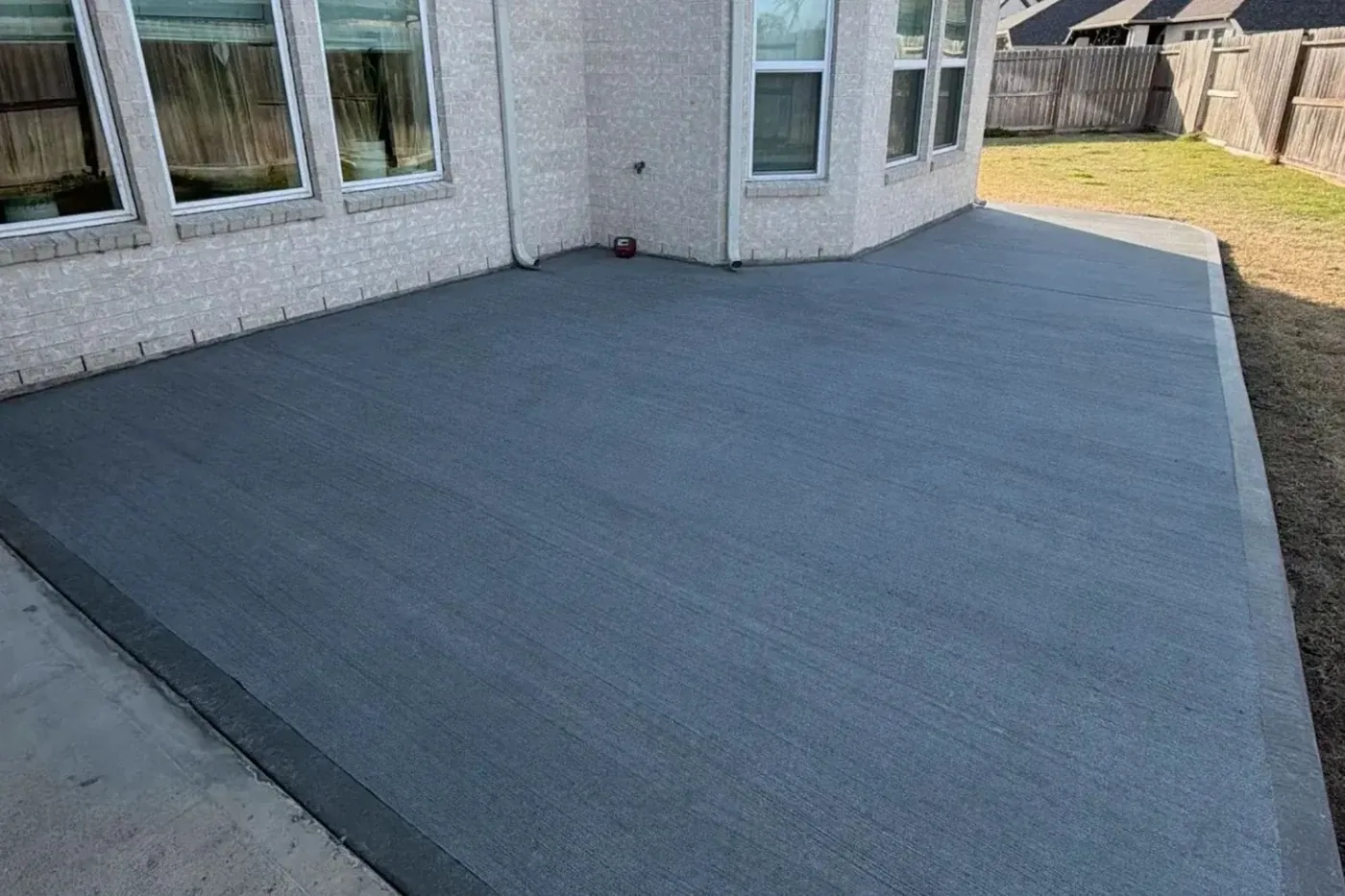
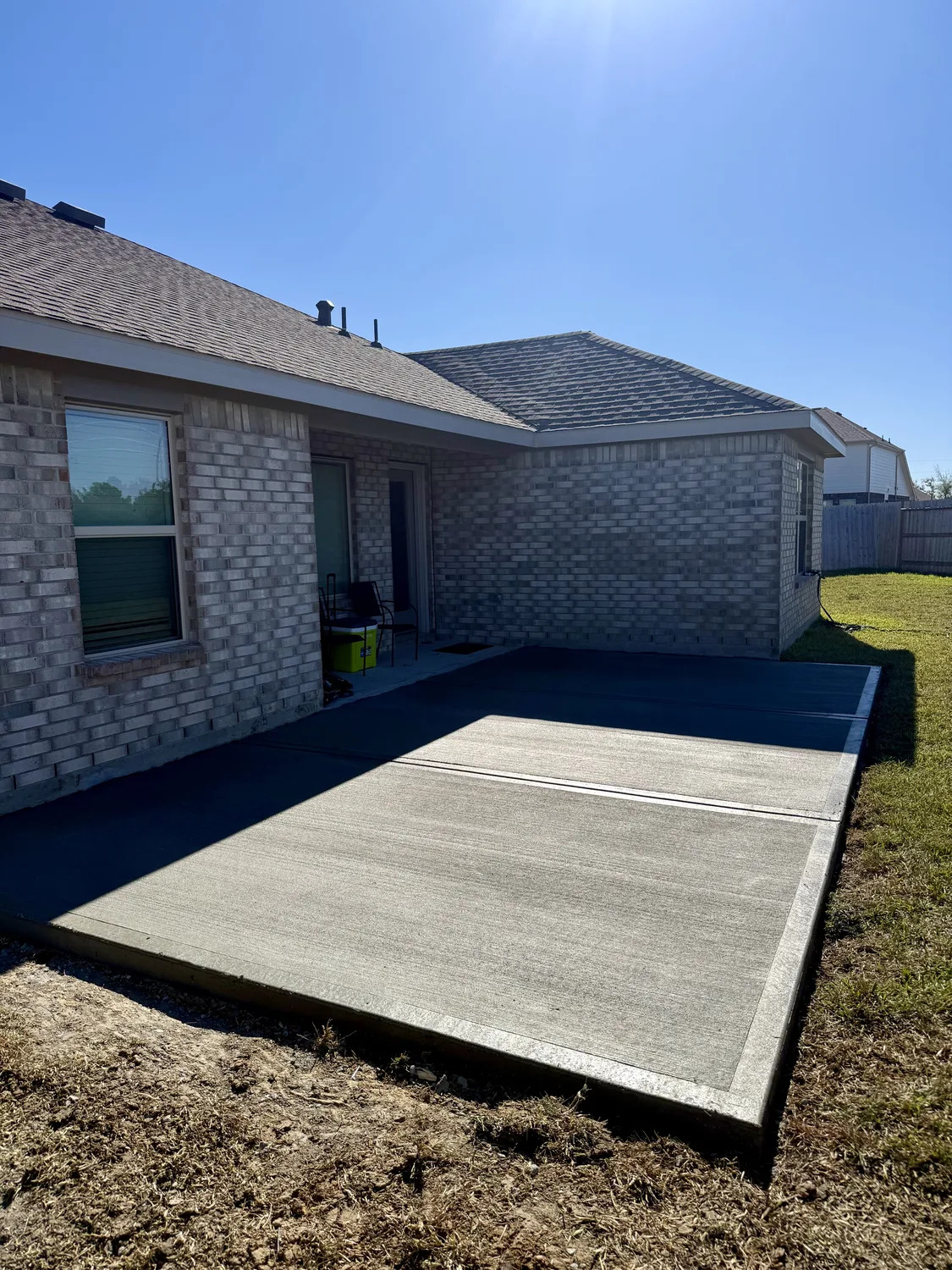
Broom is the everyday call: a textured face that stays sure underfoot when the dock is dripping, and easy on the budget. Stamped buys a stone or slate look but runs on a resealing rotation, and our hard sun paired with Atlantic salt pulls that rotation in sooner. We weigh both against how you actually plan to live on the waterside before you settle it.